
We’re starting the review of the first big event this year! Yes, we’re talking about Consensus Hong Kong 2026. This CoinDesk event brought together over 11,000 attendees, reinforcing Asia’s growing role in shaping the future of Web3, blockchain, and digital assets.
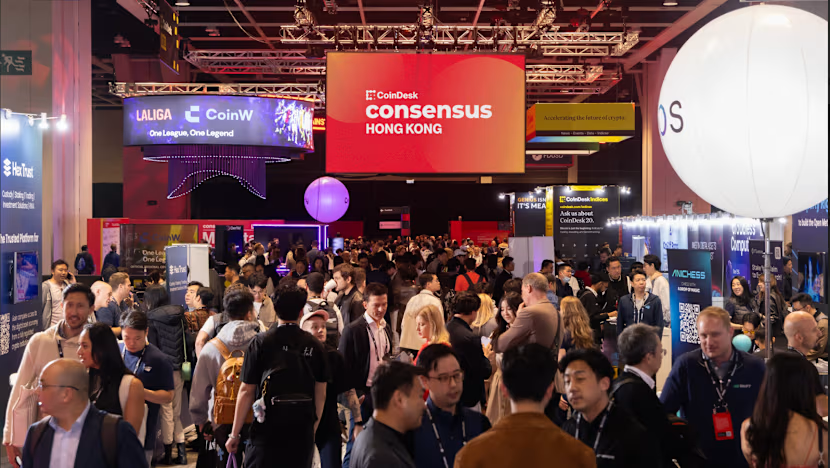
It’s amazing how the event gathered founders, investors, regulators, TradFi institutions, and crypto-native builders for a week of discussions around infrastructure, regulation, real-world adoption, and the next phase of industry growth.
And in today’s article, we break down the most important highlights, trends, and takeaways from this premier event.
Before we start – take a look at Evercode Lab’s services that we can build for you. Trust us, the services that we can develop specifically for your business will be as useful to you as this article!
Trend 1: Institutional Capital Is Here, But the Power Dynamic Is Changing
One of the dominant topics at Consensus Hong Kong was the accelerating involvement of traditional finance (TradFi) players in crypto markets. Banks, asset managers, and family offices are no longer observing from the sidelines because, from now on, they are actively investing in blockchain infrastructure, digital assets, and AI-integrated Web3 platforms.
However, this institutional wave brings tension. Many long-time crypto participants noted that financial institutions that once criticized crypto are now building “guardrails” around it. Regulation, custody solutions, compliant stablecoins, and tokenized real-world assets (RWAs) were heavily discussed.
At the same time, there is reportedly more capital available than for high-quality crypto-native projects. With a noticeable wipeout of weaker startups in 2025, 2026 may become a consolidation year.
For builders, this creates a paradox: fewer competitors, but higher expectations from investors who are still learning how Web3 infrastructure truly works.
Trend Insight
Institutional adoption of blockchain is no longer a prediction, it’s underway. But the next competitive edge will belong to teams that deeply understand both crypto-native mechanics and institutional requirements.
Trend 2: Asia, and Especially Hong Kong, as a Strategic Web3 Hub
Consensus Hong Kong highlighted the city’s unique position as a bridge between East and West. The proximity of venues and side events enabled participants to attend multiple discussions daily, reinforcing Hong Kong’s efficiency as a networking hub.
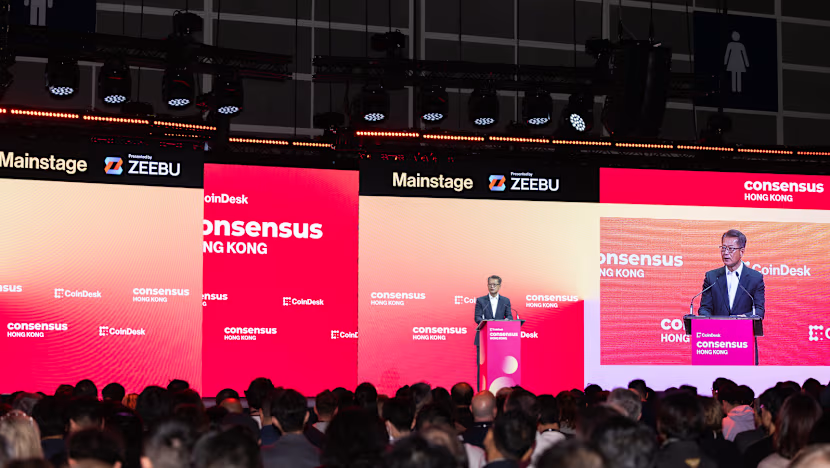
The Chinese-speaking crypto community stood out as one of the most active and bullish segments at the event. Projects seeking long-term relevance in Web3 may increasingly need regional expertise and multilingual teams to capture opportunities across Asia.
At the same time, many attendees came from traditional finance and large tech companies, signaling that blockchain is no longer a niche ecosystem.
Yet this also revealed a knowledge gap: a significant portion of participants are still early in their understanding of decentralized systems, staking mechanisms, and on-chain economics.
Trend Insight
Web3 expansion in Asia is accelerating. Teams that localize, educate, and build regionally relevant infrastructure will likely gain an advantage in 2026 and beyond.
Trend 3: From Hype Cycles to Infrastructure Maturity
Again, stablecoins, AI integration, and real-world asset tokenization (RWA) were recurring buzzwords throughout the conference. However, a strong undercurrent suggested that these themes are rapidly becoming standard infrastructure rather than speculative narratives.
Speakers emphasized that many of today’s “hot topics” may simply become baseline features within two years.
The conversation is shifting from hype to implementation: scalable blockchain architecture, regulatory clarity, interoperability, and sustainable token economics.
Another recurring theme was the lack of mass retail crypto applications. Despite years of development, truly global consumer-grade Web3 products remain limited. This gap signals both a challenge and an opportunity for builders willing to focus on usability rather than token speculation.
Trend Insight
The future of Web3 depends less on narratives and more on execution. Infrastructure, compliance-ready systems, and real user utility will define the next market cycle.
The Final Thought
To sum it up, we can say that Consensus Hong Kong 2026 demonstrated that blockchain technology is entering a more disciplined phase.
Institutional capital is flowing in, Asia is emerging as a strategic powerhouse, and speculative excess is giving way to infrastructure-focused development.
The next wave of growth in Web3 will likely be driven by teams that combine technical depth, regulatory awareness, and practical applications, and not just trending keywords. As the industry matures, sustainable blockchain products and real economic value will separate long-term builders from short-term hype.
Don’t miss the chance to improve your business with the help of advanced Web3 services right now – just visit our website, get familiar with the cool and unique products that Evercode Lab’s team can develop specifically for your request, and book a call to discuss all the details of the project!